Hey, I am Lucy. Ask me for a showcase if you want help. I know the HM and can see your selected data.
Or you could
Search 3.9M projects, 50M works, 494K organisations and their funding streams, all linked to each other. Filter by topic, funder, programme, region and year, then open any result to see everything connected to it.
Have an idea?



Built within DIGICHer
Heritage Monitor is built within DIGICHer, a Horizon Europe project working toward more equitable digitisation of minority cultural heritage. Starting with Sámi, Jewish, and Ladin communities. That mission is baked into the platform itself: we keep an open, Wikidata-grounded index of minorities, so communities can see how they're represented and you tell us when we got it wrong.
Learn more about DIGICHerWant to know more?
We turn large open datasets into insights for specific scientific fields. Starting with Digital Cultural Heritage (DCH). Intangible Cultural Heritage (ICH) is next, and the platform is built to handle any field.
We prototype fast: new features for researchers, policy makers, and communities, on solid technical ground. Have an idea you'd use? Tell us.
A lot of good research is hidden in plain sight, buried in databases nobody opens. Heritage Monitor exists to close that gap between academic work and the people who could use it.
Secret Sauce
Translation across 200 languages (NLLB)
Most research on cultural heritage isn't written in English, especially in a niche field like DCH. We use NLLB to translate [X] texts, so they become searchable, classifiable, and part of the topic model instead of invisible to anyone who doesn't read the original language.
Classification of Science, with experts in the loop (SciBert)
Not everything in a 50M work dataset is actually about cultural heritage. We use a SciBERT-based model, checked and tuned by domain experts, to carve out the subset that is, starting with DCH. That focused subset is what keeps everything downstream: search, topics, comparisons relevant instead of buried in noise.
Topics, scoped to the field (OA)
Because the data's already narrowed to one field and translated into English, topic modelling has less noise to work with: more texts qualify thanks to translation, and the topics themselves describe DCH specifically, Or science in general.
What we're prototyping right now
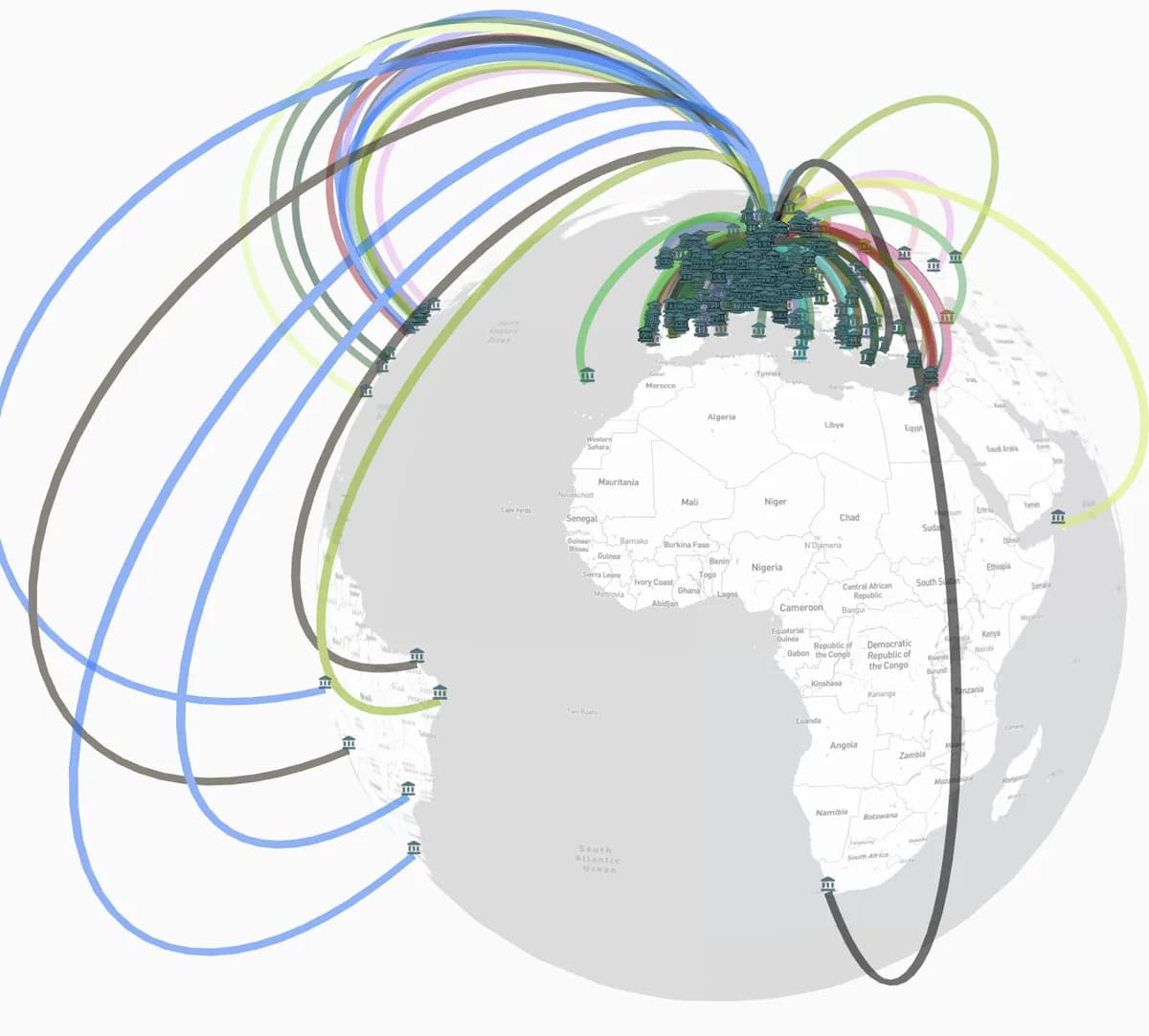
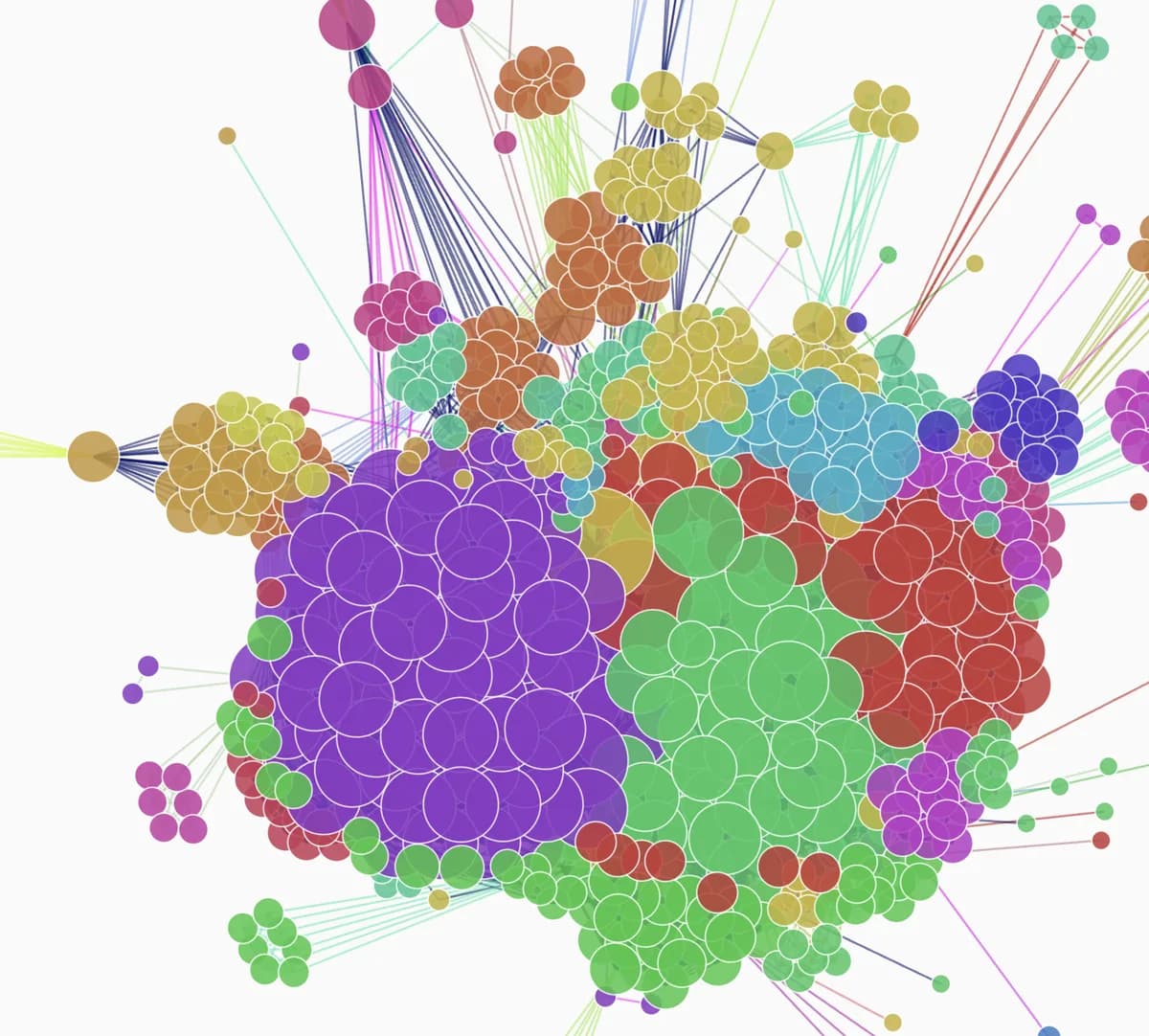
Rapid prototyping is also about how you see the data, not just what you can search. Two early looks: a deck.gl globe tracing where FSU Jena's collaborations actually reach, and a d3-force network clustering an archaeology query by topic. What ships next depends on what you tell us you'd use. We are open to anything :)